
PANELIZED STEEL FRAMING HOUSE KITS
A steel home is mostly built before it reaches the site.
We do not deliver a pile of loose studs. We deliver a precision-engineered, panelized framing system designed in 3D before it reaches the jobsite. This means greater accuracy, faster installation, and a more predictable build process. Cold-formed steel framing is recognized in U.S. building codes, and sealed engineering for your permit is quoted per project.
LOT OWNER
Find a plan that fits your lot.
BUILDER
Have plans? We’ll review them for steel.
DEVELOPER
Multi-unit or repeat builds? Let’s scope it.
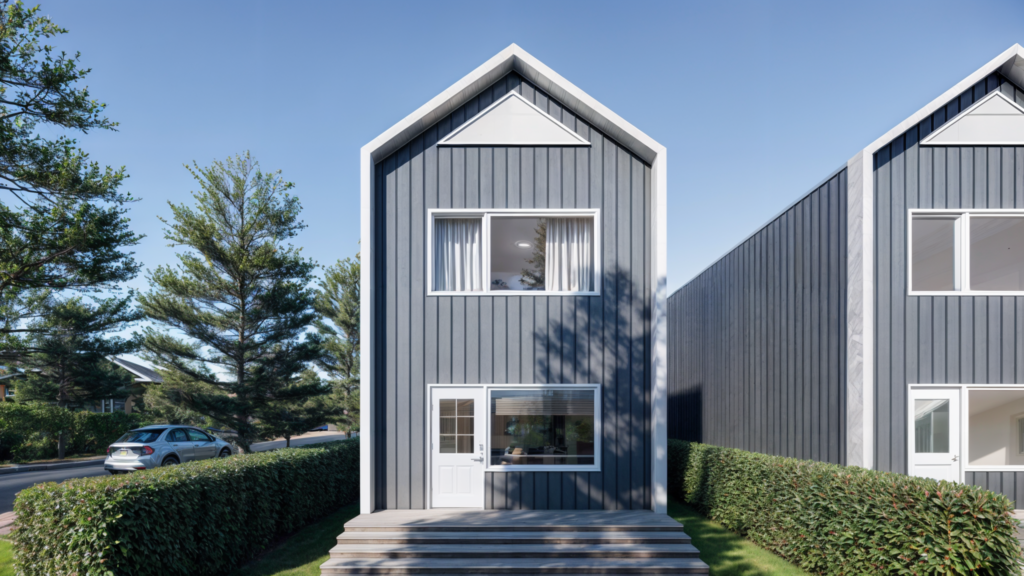
The Allen – 1,256 SF · 16’ × 42’
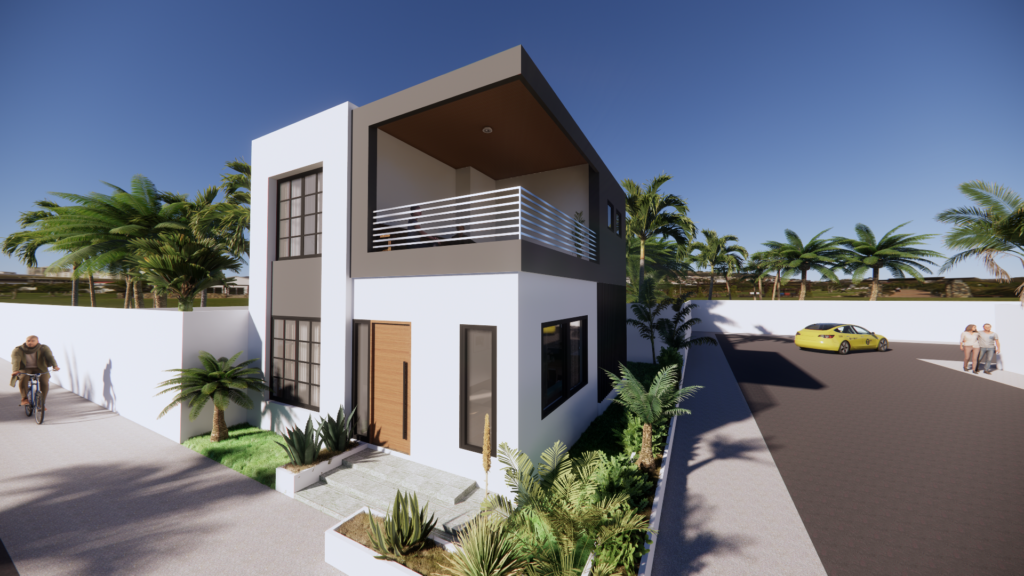
The Bova – 900 SF · 21’ × 24’
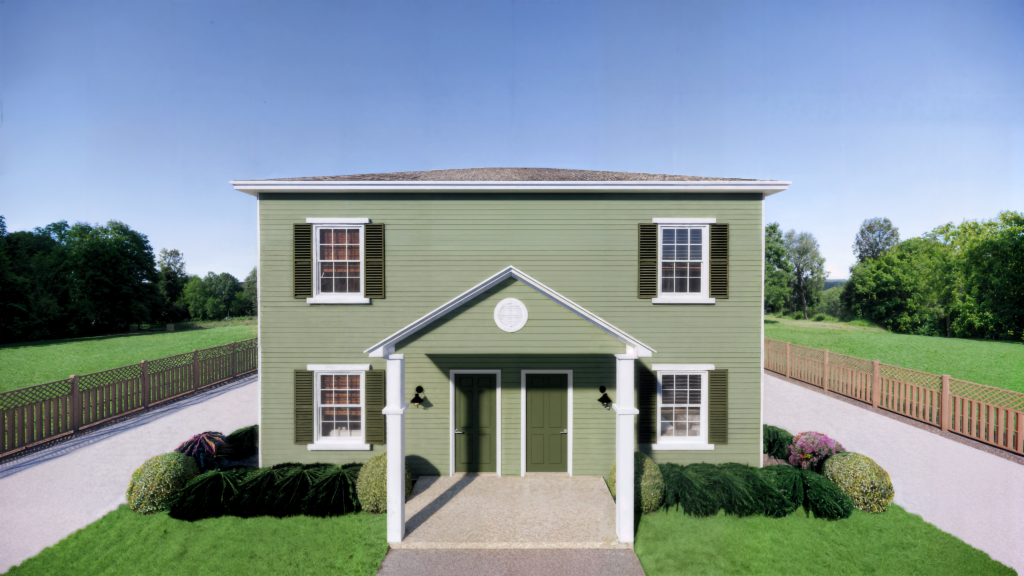
The Fielding – 945 SF / Unit · 33’ × 30’
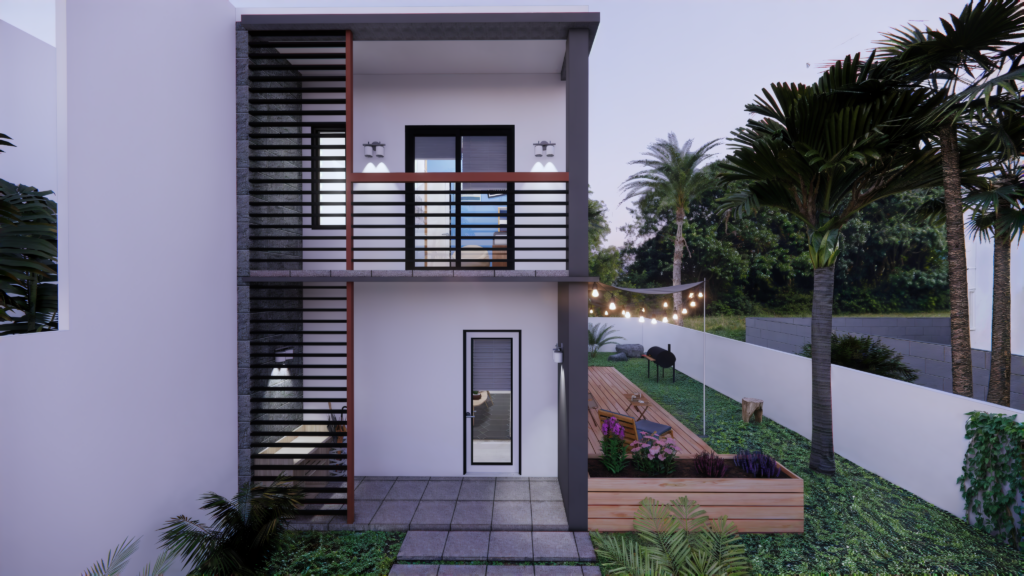
The Durand – 600 SF · 13’ × 26’
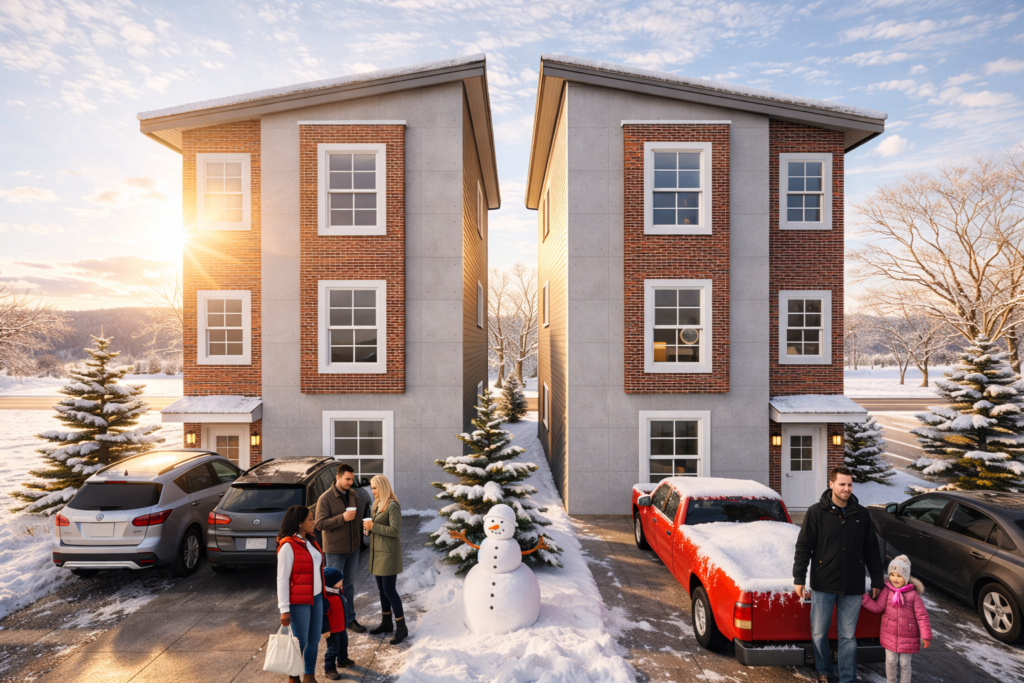
The Patel – 668 SF / Unit · 24’ × 40’
FOR BUILDERS & DEVELOPERS
Fixed at order
Your material cost is fixed when you order.
Engineer once, build repeatably
The same engineered panels for every unit. See it in The Patel, our three-story triplex.
Sealed for your site
A licensed engineer seals the structural calcs for your jurisdiction. Quoted separately from the kit price.
Common Questions About Steel-Framed Homes
Why don’t we see more homes built with steel framing?
Wood has been the default framing method in U.S. homebuilding for generations. Most builders, crews, suppliers, and plan sets are still organized around wood, so it remains the more familiar path. Steel framing is growing because it offers greater precision, consistency, and durability.
Is steel framing more expensive than wood?
Material costs can vary by market and project, but steel often creates value through reduced waste, better accuracy, faster installation, and fewer framing-related callbacks. The right comparison is total project value, not just raw material cost.
Will my local building department approve steel framing?
Yes. Cold-formed steel framing is recognized in U.S. building codes and can be engineered for permit approval just like other structural systems.
Will a steel-framed home look different from a wood-framed home?
No. Once finished, a steel-framed home looks like any other home. The difference is in the structure behind the walls.
How do HVAC, plumbing, and electrical systems integrate?
Our panels are pre-engineered with openings and chases for electrical, plumbing, and HVAC, which greatly reduces field drilling and keeps installation more organized and efficient.
Who installs the panels?
You can use your own subcontractor or framing crew. We provide training and installation guidance so crews can transition to steel with confidence.
How long does it take?
Because the system is precision-engineered and panelized in advance, steel can significantly reduce framing time compared to conventional site-built wood framing and help get the structure dried-in faster.
Are the engineering calculations reviewed by a licensed engineer?
Yes. Structural calculations are reviewed and signed and sealed by the Structural Engineer of Record when required for the project.
What about heat or cold transfer in steel?
Steel requires proper thermal detailing, just like any high-performance wall system. We address this with insulation strategies such as a continuous thermal break where required by code and project design.
Are there roofing or material restrictions?
No. Steel framing is compatible with the same roofing and exterior finish systems commonly used in residential construction. The main consideration is making sure the structure is engineered for the required roof loads, including items like tile roofing or solar panels.
Can I still use traditional sheathing, decking, and exterior materials?
Yes. Steel framing is highly versatile and works with the same common sheathing, decking, cladding, and exterior finish materials used in conventional residential construction. That includes products such as structural sheathing, exterior insulation, siding, brick veneer, stone veneer, stucco, metal panels, and standard roofing systems. The key is making sure the wall, floor, and roof assemblies are properly detailed and engineered for the specific project.
What about rust or corrosion?
Our steel is galvanized with protective coatings such as G60 or G90, depending on project needs and specifications. When properly detailed and installed, galvanized steel is built for long-term durability.
How strong is it structurally?
Steel framing offers excellent strength, dimensional stability, and precision. It does not twist, warp, shrink, or split like lumber, which helps create straighter walls and tighter tolerances.
How much fits on one truckload?
A typical 2,500-square-foot home package can often fit on one truck, depending on the design, panel layout, and roof geometry.
Do I need a special contractor?
No. Most experienced framing crews can learn the installation process with proper training and support.
Can the home be remodeled later?
Yes. Like any structural system, future modifications should be properly planned and reviewed, but steel-framed homes can absolutely be renovated or expanded.
Have plans ready? Send them to our team
Send your plans to our Detroit team. We'll review them for steel framing and follow up directly with next steps and pricing.